




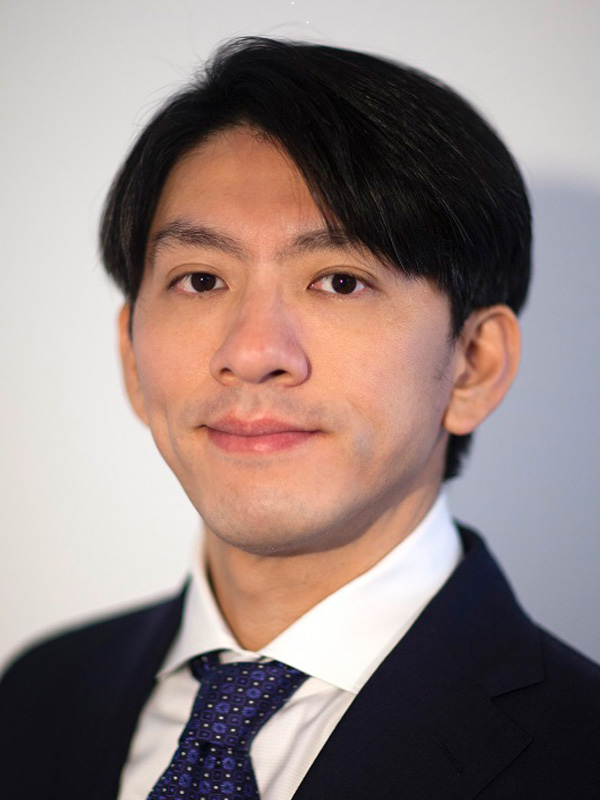
(Japanese: 樽野 陽幸)
Affiliation
Cell Physiology, Graduate School of Medical Science, KPUM (Professor, Molecular Cell Physiology, Kyoto University (2026–)
Overseas Training
University of Pennsylvania, Perelman School of Medicine (J. K. Foskett Laboratory), 2010–2013; JSPS Research Fellow
Major Research Fields
Sensory Physiology · Taste & Chemical Senses · Channel Synapse and Ion-Channel Neurotransmission · Airway Protective Reflexes · Body–Brain Interaction
Professor Akiyuki Taruno is a world-leading sensory physiologist whose discoveries have transformed our understanding of sensory signal transmission. While at Kyoto Prefectural University of Medicine (KPUM), he discovered CALHM1, the ion channel responsible for transmitting taste signals from taste receptor cells to sensory nerves (Nature, 2013, first author). He subsequently established an entirely new mechanism of chemical neurotransmission, termed the “channel synapse,” in which ATP is released directly through an ion-channel pore rather than by conventional vesicular exocytosis. This concept has reshaped the field of sensory physiology and neurotransmission.
Building on these discoveries, Professor Taruno has produced a series of influential studies on taste sensation (Neuron, 2018, 2020), airway protective reflexes (Cell, 2025), and the regulation of water intake (Current Biology, 2026), serving primarily as first or corresponding author. Since 2022, his ten most influential publications have achieved a combined journal impact factor exceeding 170, underscoring the international impact of his research.
Professor Taruno’s research is supported by Japan’s most competitive basic-science funding programs. He holds the largest individual KAKENHI award at KPUM through a Grant-in-Aid for Scientific Research (A), ranking 2nd among 408 principal investigators at the university. He also serves as principal investigator of major JST CREST and PRESTO projects. In recognition of his pioneering contributions to sensory physiology, he received the JSPS Young Scientists’ Award (2021) and the JSPS Prize (2026). He currently serves as Vice President of the Physiological Society of Japan.
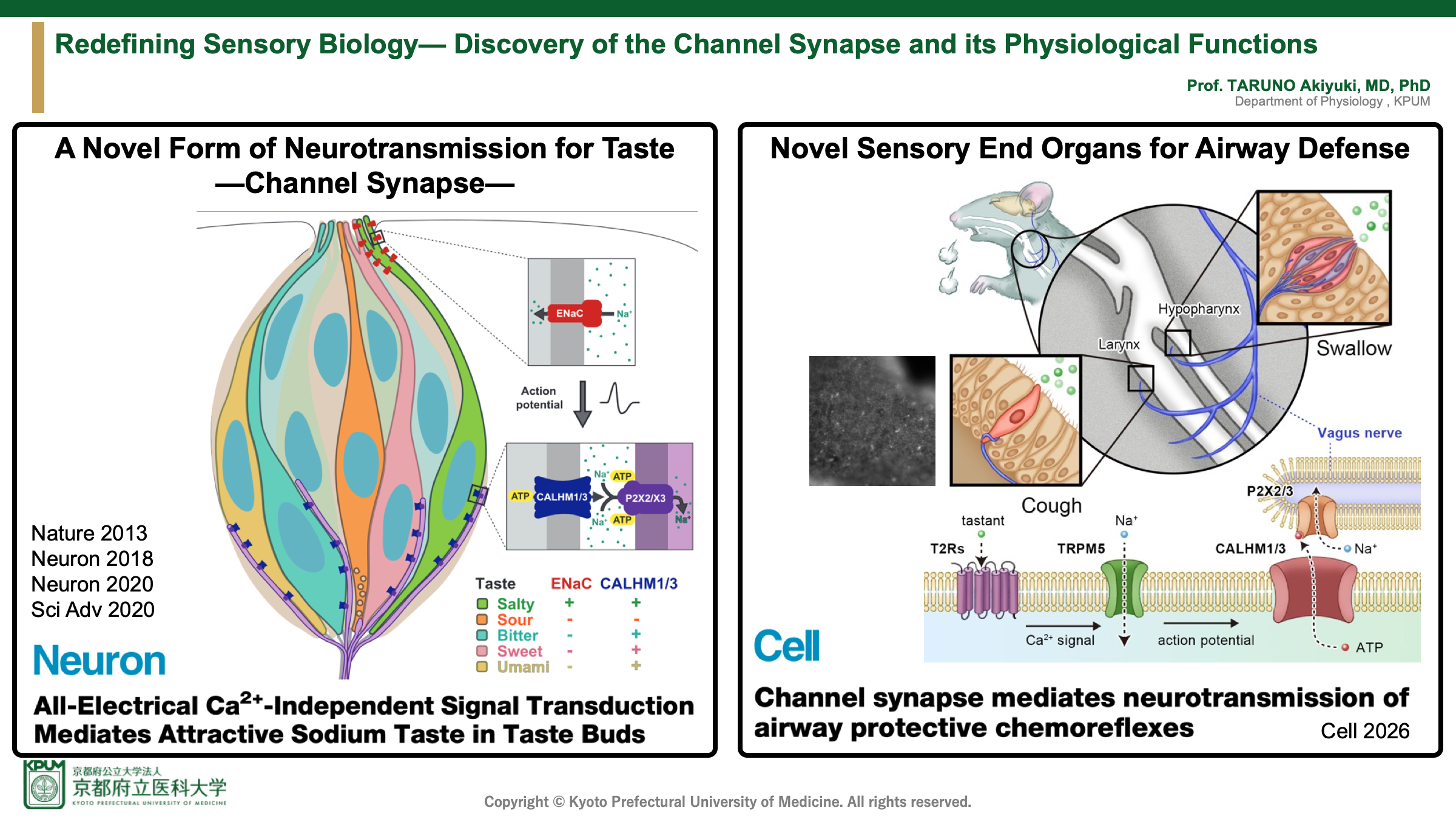
The Taruno Lab in the Department of Physiology investigates the molecular and neural mechanisms by which the body senses the external and internal environment to maintain homeostasis. Their work has contributed to the discovery of “channel synapses,” a novel form of neurotransmission in which neurotransmitters are released directly through ion channels rather than synaptic vesicles, thereby challenging the classical view of neurotransmission. They demonstrated that this mechanism mediates taste transmission to sensory nerves and, through body-wide screening for channel synapses, they recently identified novel sensory end organs that mediate airway protective reflexes such as swallowing and coughing.
Using approaches ranging from electrophysiology and genetics to in vivo imaging, behavior, and single-cell omics, the lab seeks to redefine fundamental principles of sensory biology. Ultimately, their goal is to translate these discoveries into new strategies for improving human health, nutrition, and sensory function.
Professor Taruno’s research fundamentally rewrites our understanding of sensory neurobiology. Moving beyond classical vesicle-based neurotransmission, his team discovered the “channel synapse” — a direct signal pathway through ion channels.
By screening the body, they identified entirely new sensory organs in the airway that regulate vital protective reflexes like swallowing and coughing. This is paradigm-shifting basic biology, with immediate translational potential for respiratory protection.
Research Inquiries
For inquiries regarding the research profiles featured on this page,
please contact us at:



