




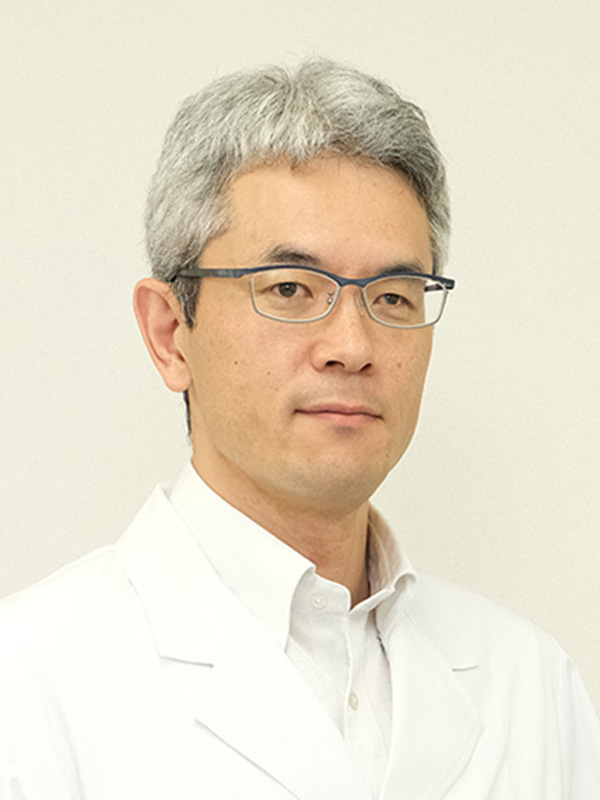
(Japanese: 星野 温)
Affiliation
Department of Cardiovascular Medicine, Graduate School of Medical Science, KPUM
Position
Senior Lecturer (April 2022 – Present)
Degree
Doctor of Medicine (MD, PhD) — KPUM
Researcher ID
50737210 (Common to KAKENHI / e-Rad)
Overseas Experience
University of Pennsylvania (2014–2017); JSPS Postdoctoral Fellow (2015–2017)
Major Research Fields
Cardiovascular Medicine / Genome & Base Editing / Mitochondrial Biology / Infectious Disease Drug Discovery (COVID-19, MERS) / Neurodegenerative diseases
※Key Numbers — Research Funding & Performance Highlights
| AMED PI Awards | JPY 624.0 M | Ranked 1st within KPUM (10-year, 27.7% share) |
|---|---|---|
| AMED Total Projects | 12 (PI 6 / Co-I 6) | Across 5 AMED strategic areas |
| Top 10 Cumulative IF | 186.7 | h-index ≈ 15–20 (Scholar) |
| Publications | 52 papers | 7 awards / international fellow |
Executive Summary
Dr. HOSHINO Atsushi is a Senior Lecturer in the Department of Cardiovascular Medicine at Kyoto Prefectural University of Medicine (KPUM) and a leading early/mid-career researcher at the institution. After graduating from KPUM Faculty of Medicine in 2003 and earning an MD/PhD from the same graduate school, he undertook postdoctoral training at the University of Pennsylvania Cardiovascular Institute (2014–2017) as a JSPS Postdoctoral Fellow. Since returning to KPUM in 2017, his research has expanded continuously from mitochondrial biology through genome-editing engineering, infectious-disease drug discovery, and protective-variant research in neurodegeneration, all unified by a single methodological backbone: comprehensive screening (CRISPR libraries and Deep Mutational Scanning) combined with bioengineering of decoys, editing tools, and receptors. In the AMED 10-year institutional research analysis (FY2016–FY2025), Dr. HOSHINO ranks 1st within KPUM with a cumulative PI awarded amount of JPY 624.0 million across 6 projects, single-handedly accounting for 27.7% of all KPUM PI awards (3.2× that of the 2nd-ranked researcher). His awards span AMED's 5 strategic areas, and he is the sole KPUM researcher with cross-domain awards of this breadth.
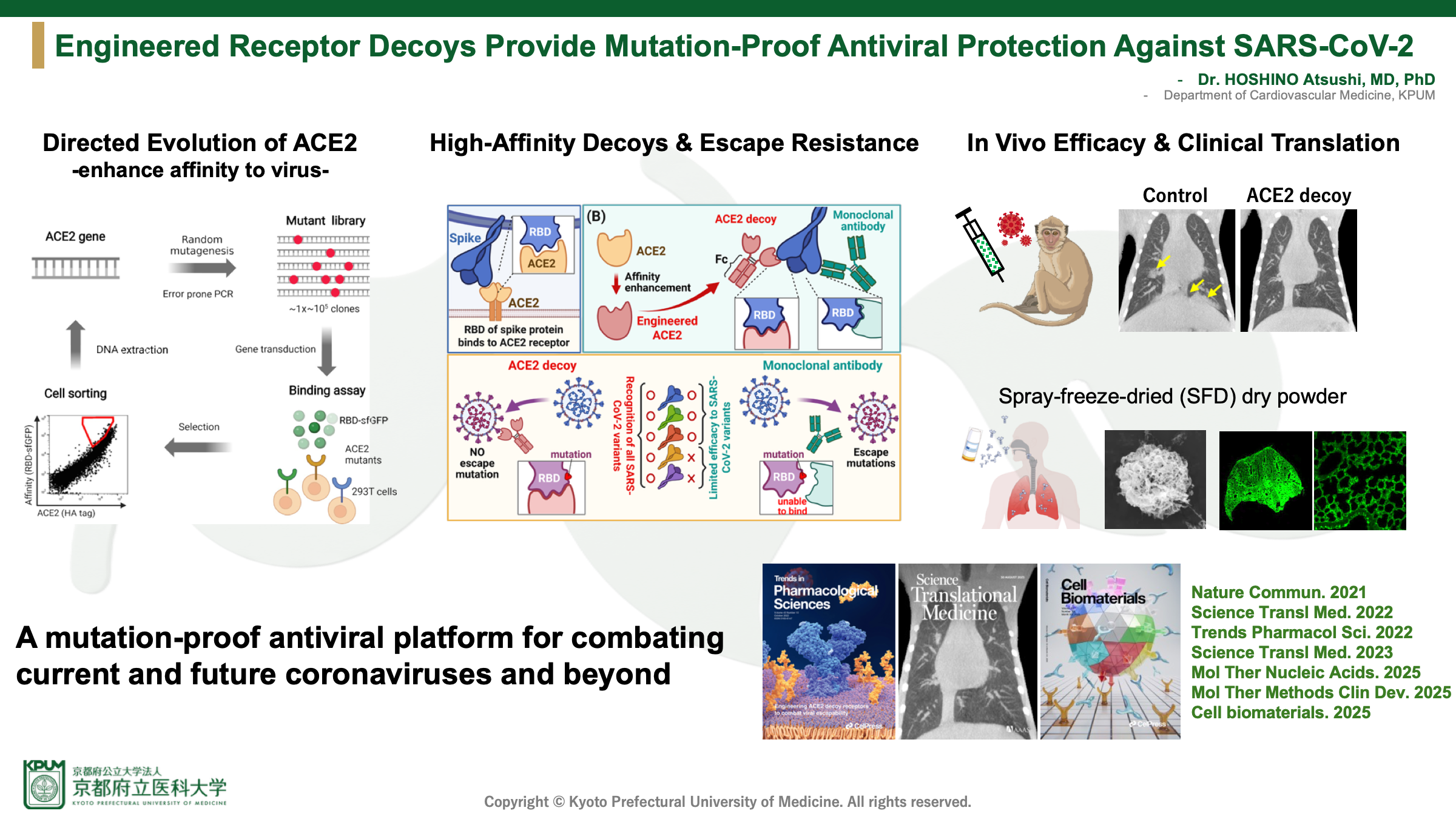
This research is the development of engineered receptor decoys as a robust, mutation-proof antiviral strategy.
While conventional monoclonal antibodies often lose efficacy due to viral escape mutations, our approach leverages the ACE2 receptor itself. By using directed evolution, we have engineered high-affinity ACE2 decoys that bind effectively to the SARS-CoV-2 spike protein.
Because these decoys mimic the virus's natural entry receptor, they force the virus into a functional trap; any mutation that allows the virus to 'escape' the decoy would simultaneously reduce its ability to infect human cells. Consequently, this mechanism ensures that our decoys remain highly effective against all existing and future viral variants."
Our research has demonstrated significant in vivo efficacy in preclinical models, showing reduced viral lung pathology. Furthermore, to improve accessibility and stability, we have successfully developed a spray-freeze-dried (SFD) dry powder formulation for easy administration.
Ultimately, this platform represents a promising, mutation-proof solution not only for current SARS-CoV-2 variants but also for future coronaviruses and other emerging viral threats."
In infectious disease, Professor Hoshino’s team solved a critical flaw in viral treatments: viral mutation. Rather than targeting the mutating virus with traditional antibodies, they engineered an elegant “decoy” of the human ACE2 receptor — the exact doorway the virus must use to enter cells.
Any viral mutation that allows it to escape the decoy simultaneously strips the virus of its ability to infect human tissue. This has yielded a powerful, mutation-proof antiviral platform, ready for formulation as an inhalable therapeutic for future global health threats.
Research Inquiries
For inquiries regarding the research profiles featured on this page,
please contact us at:



