



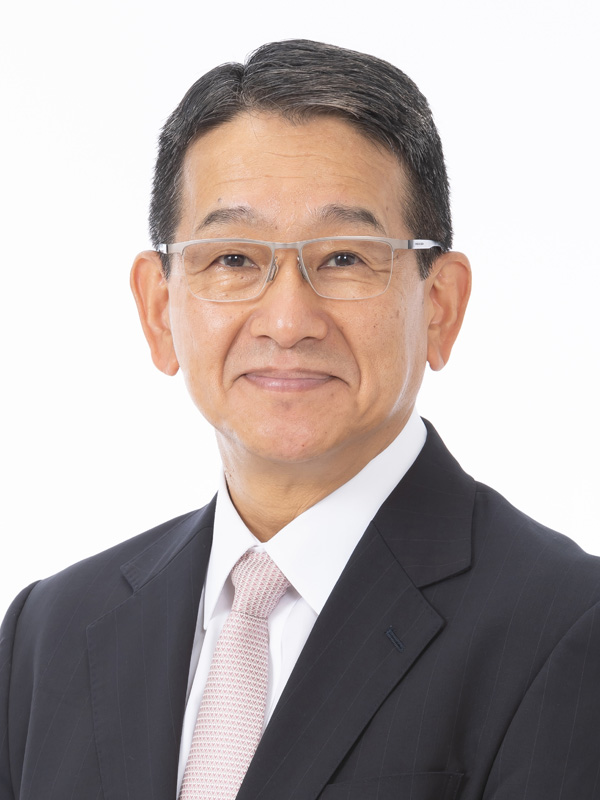
(Japanese: 内藤 裕二)
Affiliation
Department of Human Immunology and Nutrition Science, Graduate School of Medical Science, Kyoto Prefectural University of Medicine (Professor, 2021
Overseas / Public Roles
Louisiana State University, School of Medicine (Visiting Professor, 2001); MAFF Technical Council member; former AMED 'Medicine & Food' Programmed Officer
Major Research Fields
Gut Microbiota & Microbiome · Anti-Aging Medicine · Gastroenterology & Endoscopy · Oxidative Stress · Gut–Brain Axis & Nutrition
Professor Yuji Naito is a gastroenterologist and a leading authority in Japan on the gut microbiome, oxidative-stress biology, and healthy ageing. Building on a distinguished career in gastroenterology and redox biology, he established the Kyotango Longevity Cohort, a pioneering population-based study investigating the relationship between gut microbiota and healthy longevity. He has further translated these discoveries into practical health applications through the development of functional foods and the Flora Scan gut-environment assessment platform. To date, he has authored 599 peer-reviewed publications and 24 books.
Professor Naito’s research uniquely integrates basic science, clinical gastroenterology, industry collaboration, and public policy. As principal investigator, he leads an the Japan Agency for Medical Research and Development (AMED)-funded project focused on serum peptide biomarkers for the early detection of colorectal cancer and serves as a co-investigator in major translational research programs, including the development of carbon monoxide enema therapy for ulcerative colitis. In addition to his academic activities, he contributes to national science and innovation policy as a member of the Technical Council of the Ministry of Agriculture, Forestry and Fisheries (MAFF) and previously served as a Programmed Officer for AMED’s Medicine and Food Initiative. His contributions have been recognized through numerous prestigious awards, including the Sugita Genpaku Prize (2024), the Prime Minister’s Monozukuri Award (2012), and the Japan Open Innovation Award (2023).
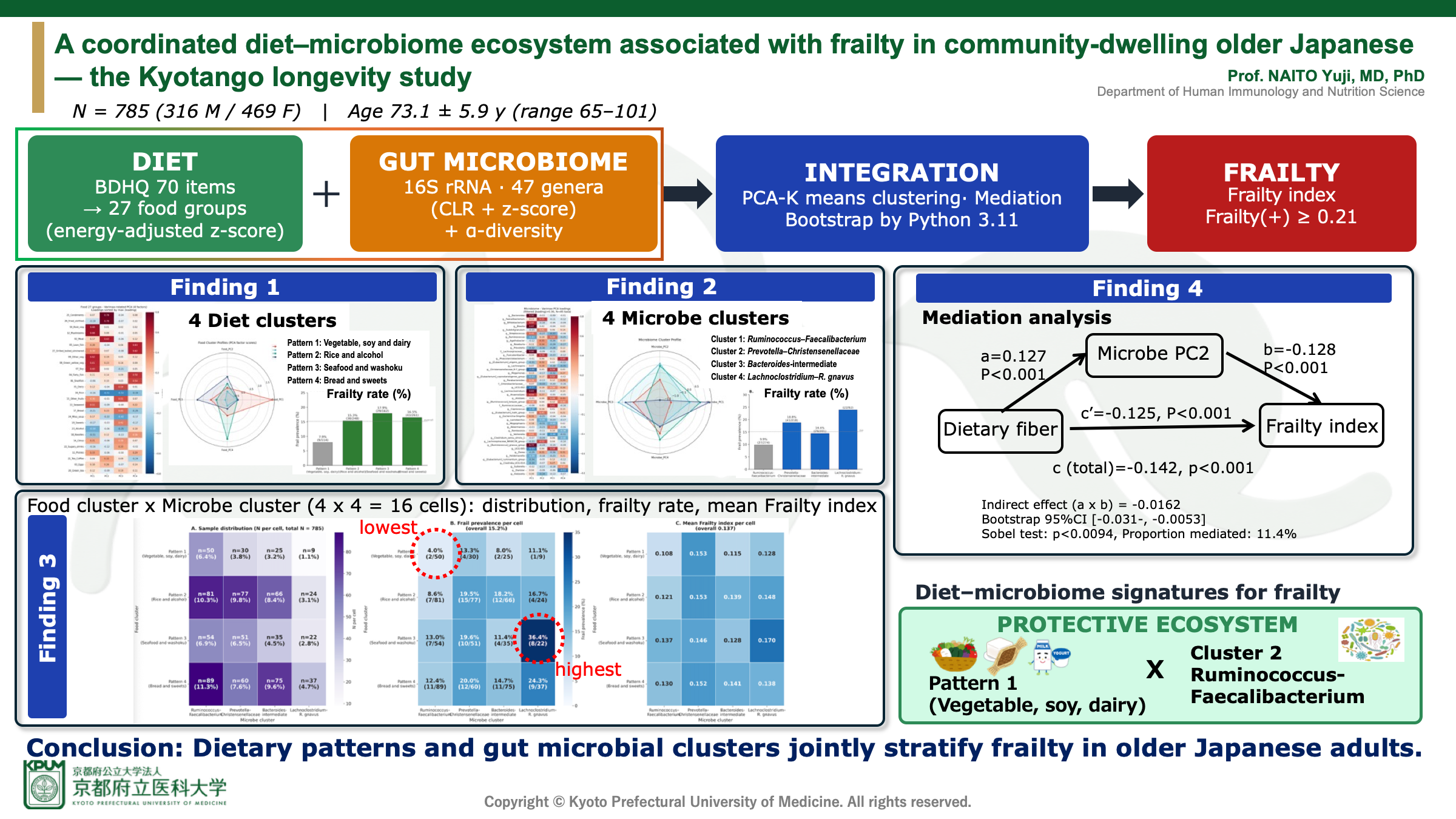
- Frail prevalence ranged from 4.0% to 36.4% across 16 dietary × microbial cells in 785 older Japanese adults.
- A vegetable–soy–dairy diet combined with a Ruminococcus–Faecalibacterium-rich gut profile marked the lowest frailty risk.
- Total fibre intake was inversely associated with the frailty index, with ~11% of the effect mediated via a butyrate-producer-rich microbial axis (Microbe PC2).
- Joint dietary–microbial profiling may improve frailty risk stratification beyond either domain alone.
Here is a concrete application from Professor Naito’s laboratory, drawing from our Kyotango longevity cohort of nearly 800 older adults. They asked a highly relevant question: do diet and the gut microbiome jointly predict physical frailty?
The data showed definitively that they do. A diet rich in vegetables, soy, and dairy, synergized with fiber-fermenting gut bacteria, resulted in the lowest frailty risk. Essentially, the food we consume and the microbiome we host act as a single, predictable ecosystem — allowing us to proactively prevent frailty before it manifests.
Research Inquiries
For inquiries regarding the research profiles featured on this page,
please contact us at:



