




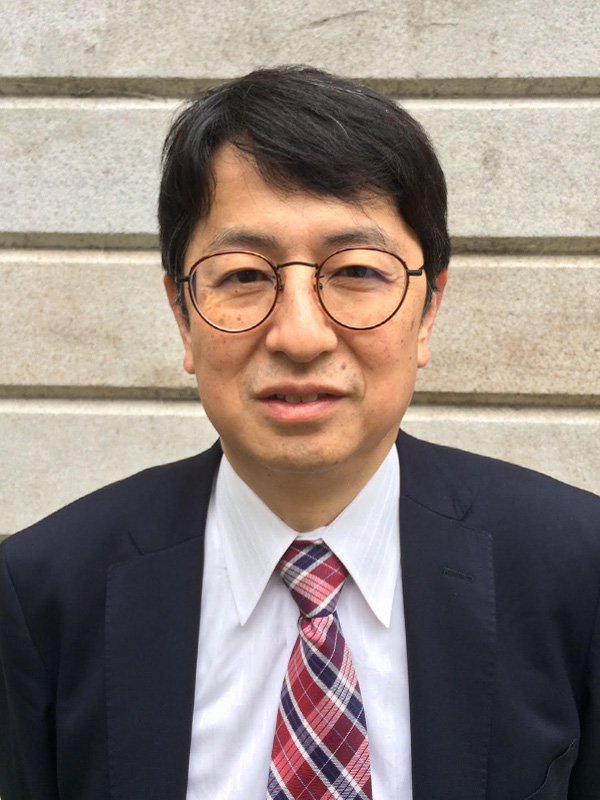
(Japanese: 佐和 貞治)
Affiliation
Director, Kyoto Prefectural University of Medicine Hospital (2023–);
Professor & Chair, Department of Anesthesiology & Intensive Care Medicine, KPUM (2010–);
former Vice-President, KPUM
Overseas / Public Roles
University of California, San Francisco, USA — Cardiovascular Research Institute (1994–1996) and Dept. of Anesthesia & Perioperative Care; Associate Professor (2002); MD & PhD, KPUM (1985)
Major Research Fields
Anesthesiology & Intensive Care · Pseudomonas aeruginosa type III secretion (PcrV, ExoU) / Anti-virulence antibody & mRNA-LNP vaccines · Sepsis / ARDS / acute lung injury / EEG-based anesthesia-depth monitoring · Antimicrobial resistance
Professor Teiji Sawa is Director of KPUM Hospital and Professor and Chair of Anesthesiology and Intensive Care Medicine at Kyoto Prefectural University of Medicine (KPUM). Following research training at the University of California, San Francisco (UCSF), he pioneered the field of anti-PcrV immunotherapy for Pseudomonas aeruginosa, beginning with a landmark first-author publication in Nature Medicine (1999). His subsequent studies elucidated the pathogenic mechanisms of the P. aeruginosa type III secretion system, including the roles of PcrV and ExoU, through influential publications in the Journal of Clinical Investigation, EMBO Journal, and Journal of Infectious Diseases.
Building on these discoveries, Professor Sawa is advancing next-generation therapeutic strategies against multidrug-resistant Pseudomonas aeruginosa, including mRNA–lipid nanoparticle (LNP) vaccines and single-chain antibody–based therapies, recently reported in Journal of Controlled Release (2025) and Nature Communications (2026). In parallel, he is developing EEG-based technologies for monitoring anesthetic depth and improving perioperative patient safety. His research is supported by a KAKENHI Grant-in-Aid for Scientific Research (B), and he serves as a key collaborator in AMED-supported programs for infectious-disease therapeutics and medical-device development.
Slide 1
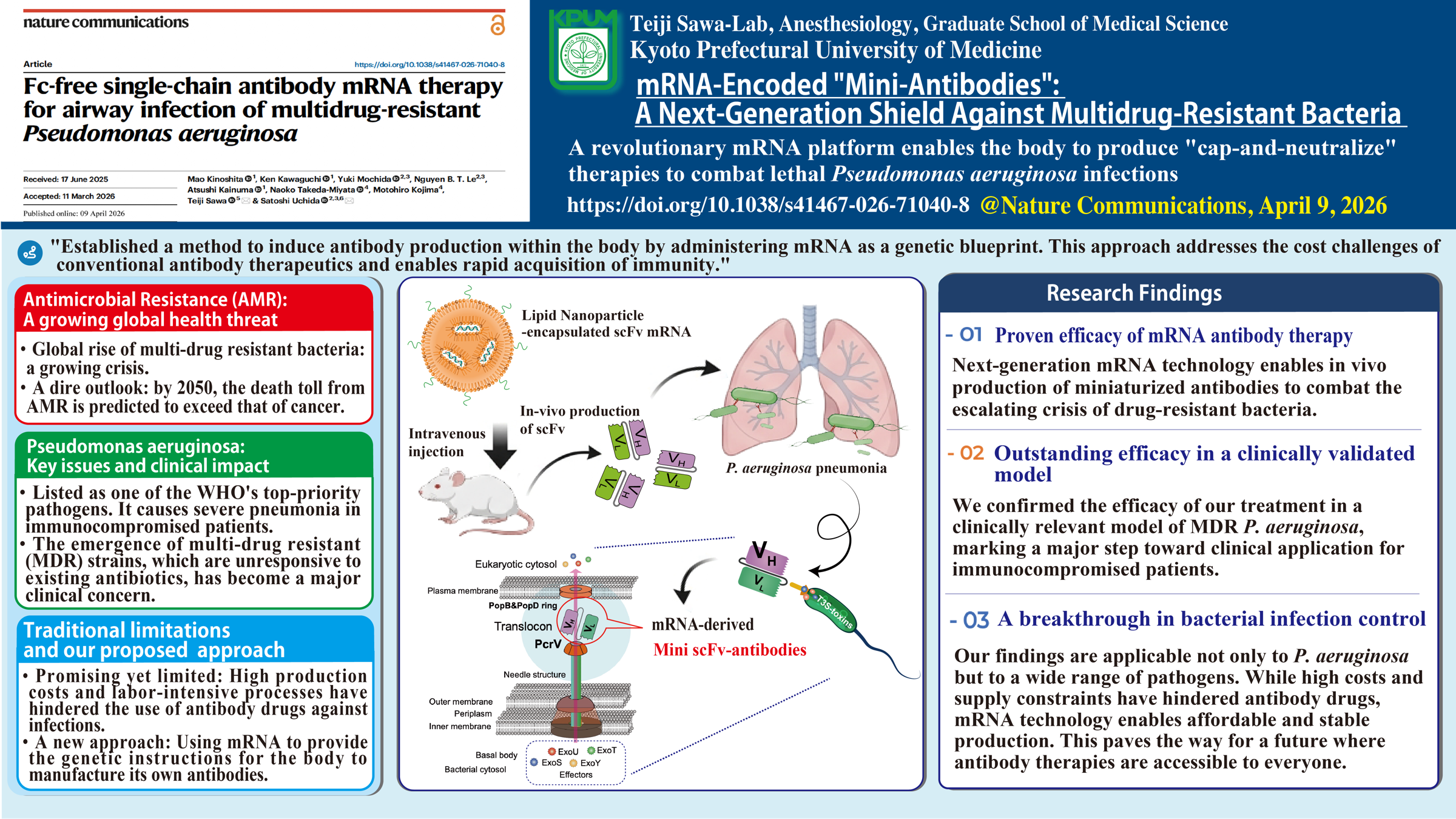
Researchers of Teijj Sawa-Lab, Anesthesiology of KPUM, with the collaboration with Science of Tokyo, have developed a pioneering antibody therapy that leverages messenger RNA to produce "mini-antibodies" directly within the patient's body. This study, published in Nature Communications (April 2026), offers a potent new weapon against multidrug-resistant (MDR) bacteria—a threat projected to surpass cancer in mortality by 2050.
1) Instead of injecting costly proteins, this therapy delivers mRNA "blueprints" that instruct the body's own cells to produce therapeutic antibodies (In Vivo Biomanufacturing).
2) Engineered single-chain mini-antibodies (scFv) penetrate deep into lung tissue, offering superior efficacy compared to traditional full-sized antibodies (Mini-Antibodies with Max Impact).
3) In mouse models of drug-resistant Pseudomonas aeruginosa pneumonia, mRNA therapy achieved 80% survival in healthy mice and nearly 50% in immunocompromised mice—outperforming colistin, a last-resort antibiotic (Survival Advantage).
4) Combining mRNA therapy with conventional antibiotics resulted in 100% survival, demonstrating powerful complementary effects (Synergistic Potential).
5) Leveraging the same mRNA platform proven by COVID-19 vaccines, this approach promises faster, cheaper, and more accessible antibody production (Next-Gen Scalability).
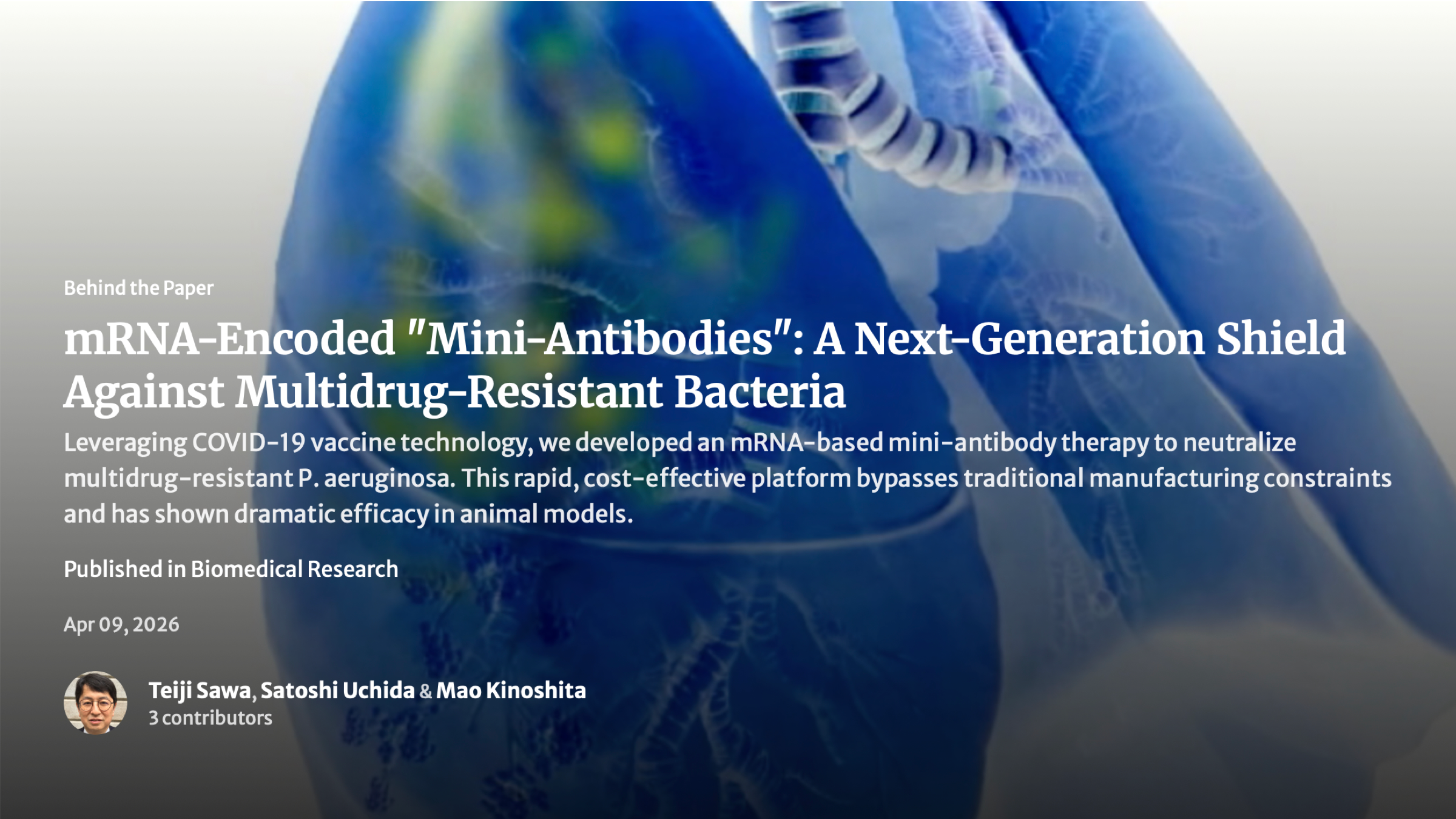
Addressing the looming crisis of antimicrobial resistance, Professor Sawa’s group applied lessons from mRNA technology to combat drug-resistant Pseudomonas pneumonia.
Instead of manufacturing costly antibodies, they deliver mRNA blueprints — using lipid nanoparticles — prompting the patient’s own lungs to generate highly penetrative, single-chain antibodies. Published in Nature Communications, this therapy achieved complete survival in critical models when combined with standard antibiotics. It is a faster, scalable, and highly potent alternative to traditional antibiotics.
Slide 2
Research Inquiries
For inquiries regarding the research profiles featured on this page,
please contact us at:



