




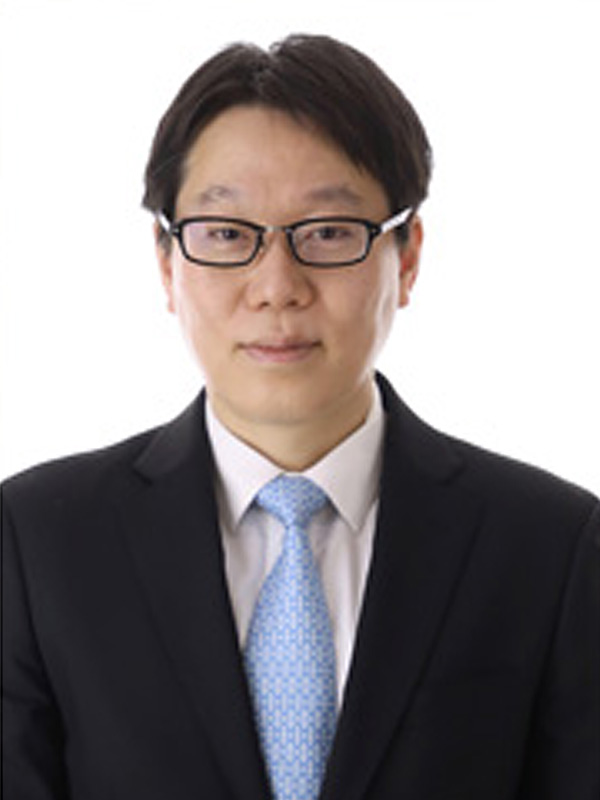
(Japanese: 福本 毅)
Affiliation
Professor, Department of Dermatology, Graduate School of Medical Science, Kyoto Prefectural University of Medicine (2025–); MD, Yokohama City University (2005); PhD (Medicine), Kobe University (2016)
Overseas / Public Roles
The Wistar Institute, Philadelphia, USA — postdoctoral research, R. Zhang Laboratory (cancer epigenetics); Visiting faculty, Institute of Molecular Biology, University of Oregon, USA (2025–); eLife Early-Career Reviewer (2021–)
Major Research Fields
Dermatology · Pigment-cell biology & melanoma · Cancer epigenetics (ARID1A/SWI-SNF, EZH2, HDAC, m6A) · Cellular senescence & photoaging · iPS disease modeling (xeroderma pigmentosum) · Evidence synthesis / Global Burden of Disease
Professor Takeshi Fukumoto is a dermatologist-scientist whose research bridges cancer epigenetics, pigment-cell biology, and regenerative disease modelling. Following research training at The Wistar Institute in Philadelphia, where he investigated SWI/SNF–ARID1A-mediated cancer epigenetic mechanisms, he has established an internationally recognized research program focused on the molecular basis of skin diseases and melanoma. His work has been published in leading journals, including Cancer Research, Cell Reports, and the Journal of Investigative Dermatology, and he has contributed to collaborative studies published in the Nature and Cell journal families.
Professor Fukumoto achieved the world’s first stable induced pluripotent stem cell (iPS cell)-derived melanocyte (iMC) model, creating a powerful platform for investigating pigment-cell biology, melanoma, and inherited skin disorders. Building on comprehensive genomic and epigenomic analyses, he is advancing proprietary therapeutic seeds and translational research programs targeting melanoma, xeroderma pigmentosum, and skin ageing. His research is supported by competitive funding from both KAKENHI and the Japan Agency for Medical Research and Development (AMED), for which he serves as principal investigator. He also holds leadership roles in national dermatology and pigment-cell societies, contributing to the advancement of dermatological science and regenerative medicine in Japan.
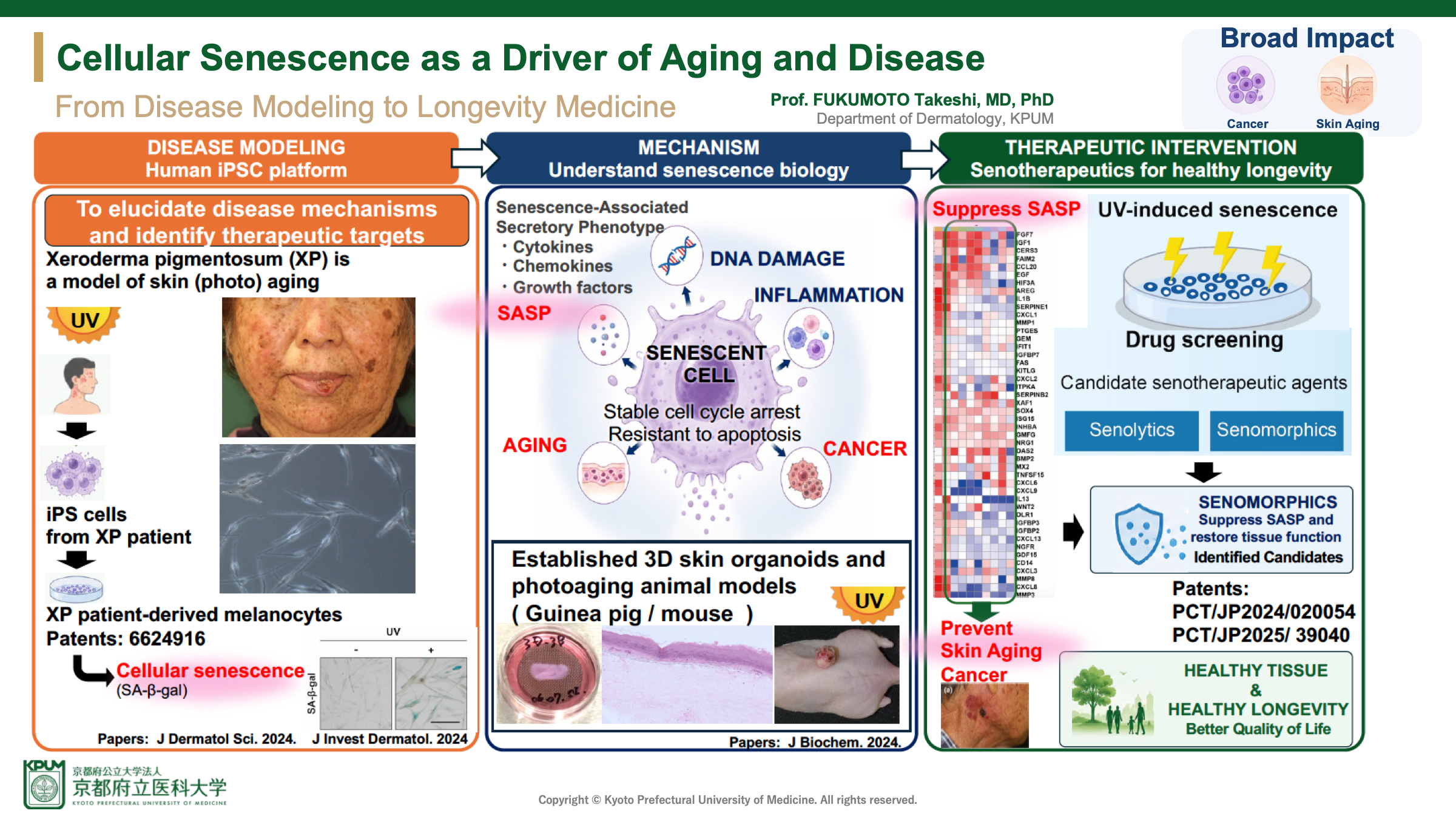
Returning to cellular aging, this slide highlights our work on skin senescence. To model this, we utilize xeroderma pigmentosum (XP) to analyze UV-induced damage using patient-derived iPSC melanocytes, 3D skin organoids, and animal models.
Through this translational platform, we are actively developing senotherapy strategies—including both senolytics and senomorphics—and have already filed several international patents for our candidate compounds.
By targeting these mechanisms, we aim to establish innovative longevity medicine, providing a direct molecular bridge to the macro-level longevity studies I will share next.
Research Inquiries
For inquiries regarding the research profiles featured on this page,
please contact us at:



